an exhibit on facing death and dying together

“We were honoured,” Mountbatten say on the website that introduces this exhibit, currently on display at Mountbatten Isle of Wight, “that those who participated shared their stories with us.”
“Sometimes those stories were serious and sad. Often, they were hilarious, fun, and full of achievement. The portraits reflect all these experiences to create an honest portrayal of what living, dying, remembering mean to us as we live and support people through death, dying, and bereavement.”
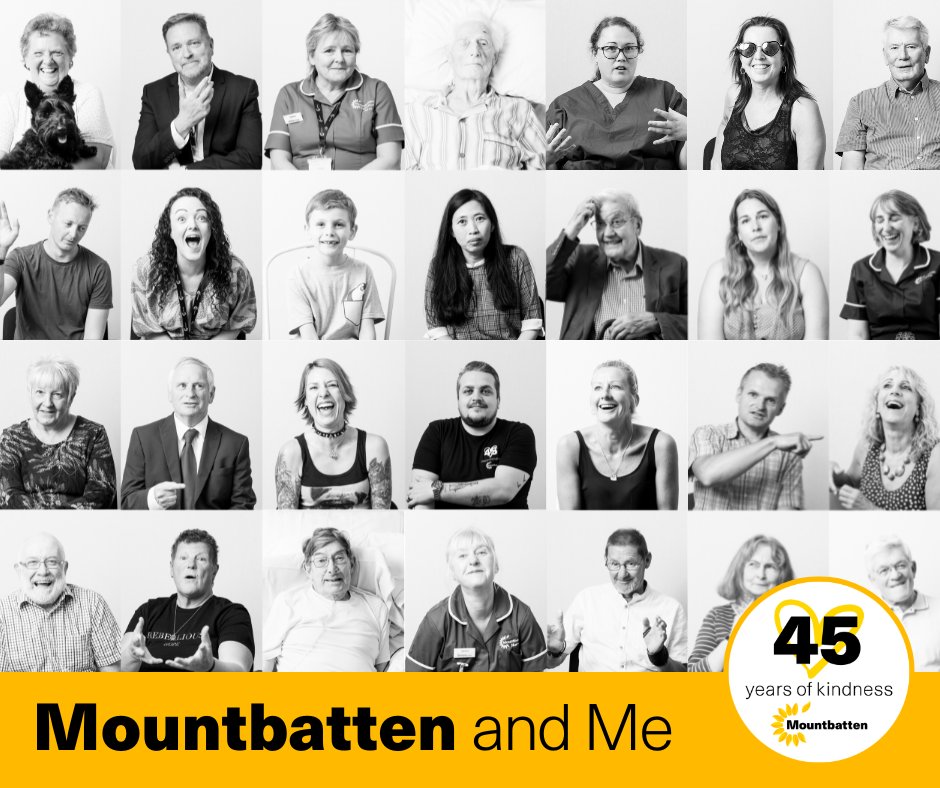
The portraits are magnificent – in black and white, which Tia thought really drew out each person’s character, but which also created a kind of common thread holding together this very diverse group of individuals – patients, staff, families, volunteers, supporters….
There are no captions, no attempts to bunch people into categories. Just wonderful faces threaded through the hospice corridors – and that is all the corridors. You wander from the brightly decorated open area, the café, past the family-stay room, offices…. The faces lead you on … The message – as Tia read it – is one of connection – all of these people linked in a common project …
*
For Tia, following the faces at Mountbatten led to a series of reflections and some memories…
First, she loved how these portraits were, literally, all together. No explanation, no rankings or classifications, just the existential full-frontal faces of people joined together to look at us and highlight the condition that all of us share or will share – death, dying, bereavement, and the need for care and kindness.
But there was more. Here, in this hospice, anyone can come to see the exhibit. Which of course is a wonderful way of making the inner workings of a hospice more familiar, less formidable, less potentially mysterious. And it reveals the hospice as many things. It is an art gallery, a cultural centre, a community hub, a centre coordinating care in the community. It is a café, lounge and sun deck, a music room, an art studio, a lovely garden, an adapted gym, a multi-faith chapel, a hairdressing area, medical and other treatment rooms, and private rooms where people are in their last hours or days… This diversity of purpose gives the hospice a kind of dappled light; just as in the stories behind the photos, what happens here can be hilarious, serious, sad…
*
Joy and pain, light and shadow, laughter and tears… In Tia’s personal experience of death and dying, all of these words apply. Sixteen years ago, and fourteen years ago, Tia was in New Jersey while, first her mother, then her father, were ill and died. The two deaths were different, but aren’t all deaths unique?
In New Jersey, the light was also ‘dappled’. There were moments of levity, moments of sorrow, times of extreme sadness, times of, if not hilarity, then certainly pleasure, sometimes joy. Moods and events shifted not only day to day, but minute to minute. And there were things that happened only because they happened at a time when we were living with death and dying.
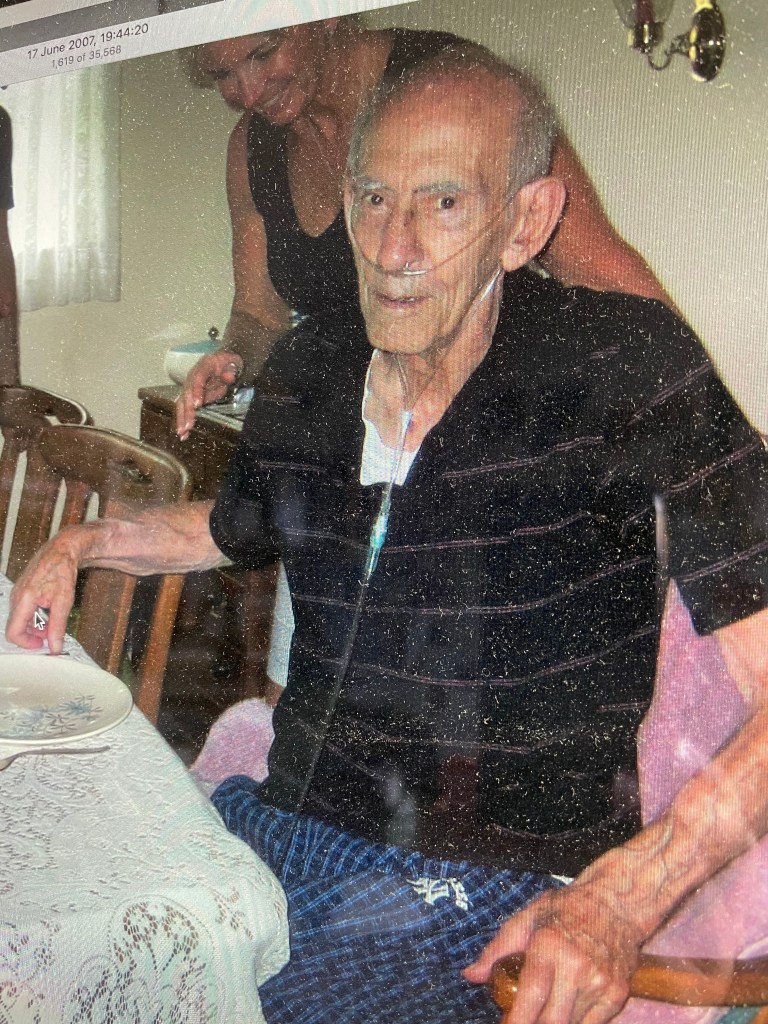
For example, after nearly dying of dehydration (linked to an inability to swallow after radiation treatment), Tia’s father, John, was admitted to hospital. There he was helped rehydrate. Tia and her husband, Doug, brought John his favourite soup and other possibly tempting things to eat. Doug sat with John and, to encourage John to eat, ate along with him, pantomiming the enjoyment of slurping the soup. The chemo and radiation therapies were curtailed (too weak to go on). John was released from hospital. He returned to the family home where he’d lived for 45 years. For a while – from April through September – he became stronger. After release from hospital, John lived for nine months. He died shortly after the Christmas holidays, at home, loved ones at his side. The funeral directors showed little surprise when asked to wait before coming to ‘collect the body’ (there is an Italian-American custom of keeping the person at home for a while to let people call in and pay their last respects). So, some of John’s closest friends and family came over the afternoon, one or two at a time to sit with John and say their goodbyes…
Throughout his life, John loved nature – trees especially, and after a ramp was installed at the front door of the house (and the summer weather arrived), he was able to get out to the front garden (a wheelchair made this possible – beautiful object!). During this last summer, John sat near to one of his beloved trees, and in front of the mature shrubs he’d planted – in 1962. The family group quickly became the focal point for sometimes extensive social gatherings. Neighbours and acquaintances who were driving by would pull over, get out, and stop to chat. Which meant that Tia was often busy making and serving coffee (or wine) out there in the garden, in front of the house, fully on view. It was very much a moveable feast…

In those final months, John picked wild raspberries that grew along the road side. He did a little weeding, sitting in his chair and using a long-handled tool. He, and Tia and Doug were surrounded by not only extended family (John’s youngest brother and his family, other cousins and their families), but old friends, neighbours (some of whom they only got to know because of being outdoors so often and in the front of the house), new friends and helpers (some of them paid), the UPS delivery man, the postman, the garbage man, the former police chief, the man who paved the driveway and became a good friend, the visiting hospice nurse, in short, whoever might have been passing but felt like they might spend a moment or two to chat, drink a coffee, eat a small sandwich, an olive and a cocktail onion on a toothpick, a nut, a piece of pecan loaf….. This became a little like “John’s Café,” all of its patrons part of a circle, connected, communing…
*
This year we have seen the, “Report of the Lancet Commission on the Value of Death: bringing death back into life” (available as Open Access here). The Report calls for rethinking how we think, speak and imagine death and dying, how we live with, in and through that process:
“The ability to shape the future sits with us all. The Commission believes that profound, rather than incremental, change is needed to transform how we relate to death, and how we die.…”
The authors propose (with a nod to philosopher John Rawls), ‘realistic utopias’ of death and dying. By this term, they mean doable visions of how things might be able to be if we want to solder death to life, the dying to the living, and so to recognise the ways that death is of value in our lives.

*
The period before John died was not an ‘easy’ time. But it was rich and real. When autumn came and it was time to move inside – to what is called in the USA, “the living room,” where the hospital bed was positioned, all John’s circle came in too. The aluminium ramp up to the front door became a kind of musical instrument, a resonant symphony of everyone trooping up and in for a visit, a coffee, a piece of cake, an olive… The same ramp made it easier for some of these people to come inside. Ninety-year-old friends (one of whom had recently had an operation on her leg) found the ramp more friendly than the steep steps it replaced. The neighbour across the road joked that the metal of the ramp worked like a sun-reflector to give her extra light. Tia’s cousin, a wheelchair user, was able to visit in the living room again instead of being confined to the area behind the garage in the basement. So, dying, and the various adaptations it entailed, made new things possible. Those things included what we talked about to each other as we sat with John, with each other, with death and dying in the foreground. Tia thinks that everyone was at ease those days and evenings sitting with John. It was like a dream (or a realistic utopia?) – sitting in a circle, talking about things that might otherwise not have been said, or perhaps even thought of….
*
Dappled light. It shed a different kind of light on how Tia thought about and experienced death and dying. It recast how she related to others in that shared project, and – to the extent she can know this – vice versa. It recast Tia and, probably, the others too, who brought to the scene a rich array of experience, practical advice, skills, care, kindness, humour, and also umpteen casseroles, bottles, cakes, pies, and cups of coffee. It was A Moveable Feast…
 Island Life and Death
Leave a comment