Wolfgang Schmid and Jill Halstead’s film – on music at end of life
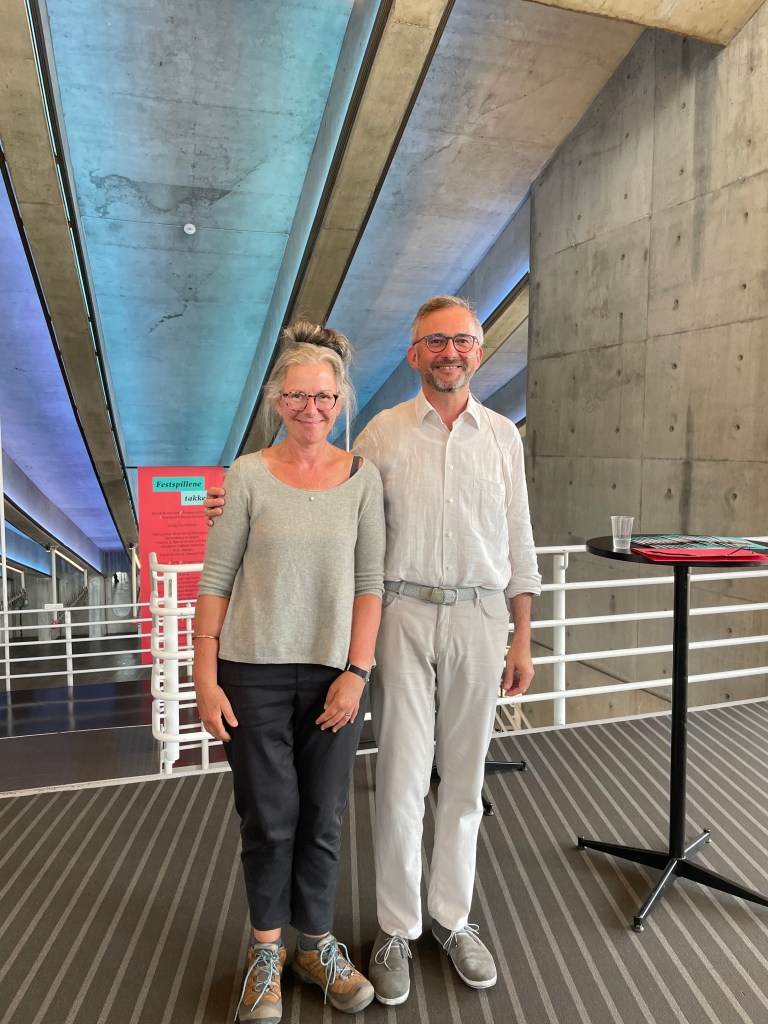
In the last week of May, Tia was in Bergen. For meetings. It has been busy. The Sounding Relation Team, in the person of Eva Marija Vukich and Maren Metell. There is work ongoing with Viggo Krüger (writing together, an article on song creation). And Kjetil Hjørnevik (planning a conference on music making in institutional settings such as prisons, schools, hospitals). And continuing work with Wolfgang on the Kantele book project. The Grieg Academy’s researchers are inspiring…
*
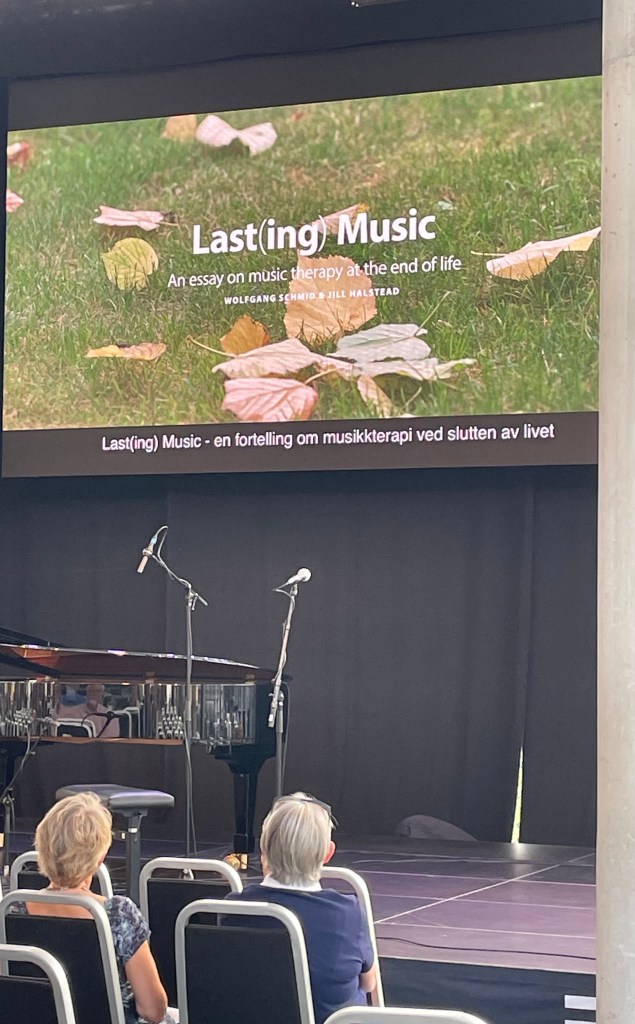
It was also the week of the premier of of Wolfgang Schmid’s film, Last(ing) Music, made together with Care for Music Advisory Board member Jill Halstead.
The film was screened as part of the 50th Anniversary of the Stikk Innom, or Drop in concerts, an annual series offered by students and staff at the Grieg Academy, and officially part of the Bergen International Festival . (NB These are wonderful, innovative, joyful events – low-threshold, cafe-style, sit where and how you like, multi-genre – and possibly one of the few, or only, 1970s ‘informal’ concert type to have survived intact from the 1970s.)
Saturday’s concert was a five hour ‘marathon’. Rich, thoughtful, beautifully rendered music, film, music-research demonstrations, and short lectures. The previous day’s concert looked back at the history of the Stikk Innom and Grieg Academy; the marathon on the 25th was future oriented: how might the Grieg Academy’s portfolio of music, and music-research, be looking over the next decades?
The foyer of the Grieg Hall was full – wide age range, locals but also people from further afield and visiting this glorious city.


*
In the spirit of Care for Music‘s Gentle Methods, Last(ing) Music focused on one case study: one woman, ‘Kari‘, whom Wolfgang met in his capacity as Music Therapist in the palliative centre at Haukeland.
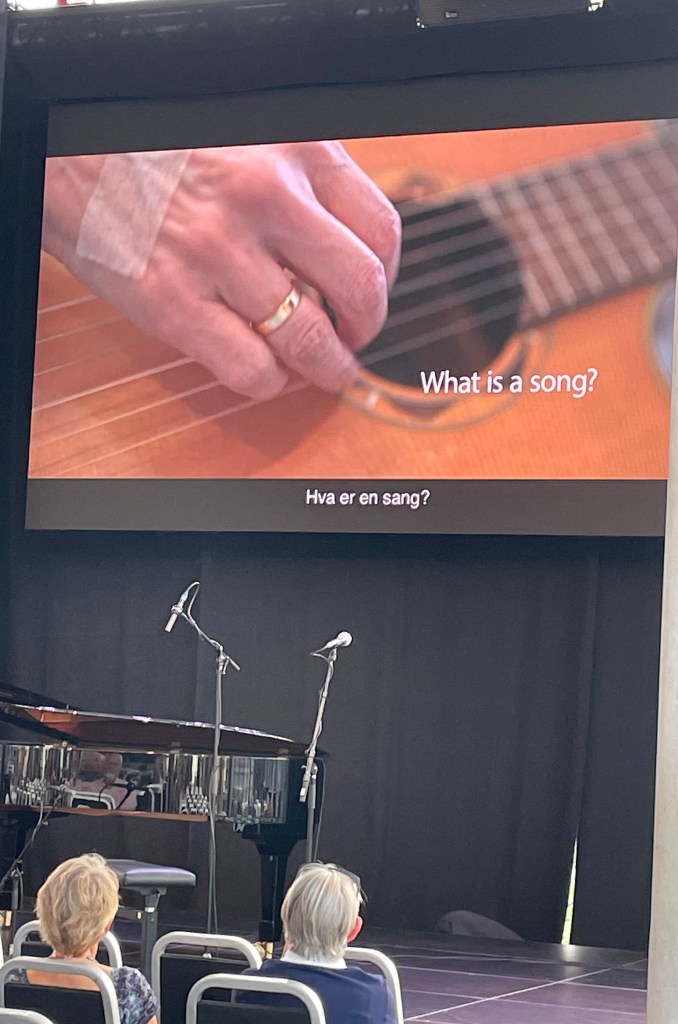
At first Kari was reluctant to consider making music in her situation. But she and Wolfgang began to talk. Kari told Wolfgang about an important musical moment in her life, nearly 50 years before – hearing Ella Fitzgerald sing ‘The [Boy] from Ipanema in the Grieg Hall, Bergen, Fitzgerald’s only stop in Norway on that European tour. Their exchange opened a window into Kari’s biography and within it, her unique experience of this classic song….
Ooh, but I watch him so sadly
Oh, how I love him so madly
Oh, does he know that I love him
When he walks, when he walks by the sea
He smiles, but not at me…
*
They found the song on Spotify and listened to it together. More talking…. Then they decided that maybe Wolfgang could try playing (and singing) the song with his accordion… And then, Kari herself reconnected with her guitar – and played the music again, a last, lasting time….

*
Wolfgang gave a short lecture to contextualise the film. Reconnecting with music, or rather, with the music that had always been important to Kari in her life, was, he said, a way of addressing, and redressing, the experience of Total Pain. Total Pain, a concept that originated in the British hospice movement and the work of Cicely Saunders, is typically understood as the complex, existential mixture of physical, psycho-social and spiritual suffering that can sever a dying person from others – and from themselves.
As Wolfgang described it, reconnecting with her music was, for Kari (and for many others) a way of staying connected to life’s meanings, to memories, to one’s stories and to people.
*
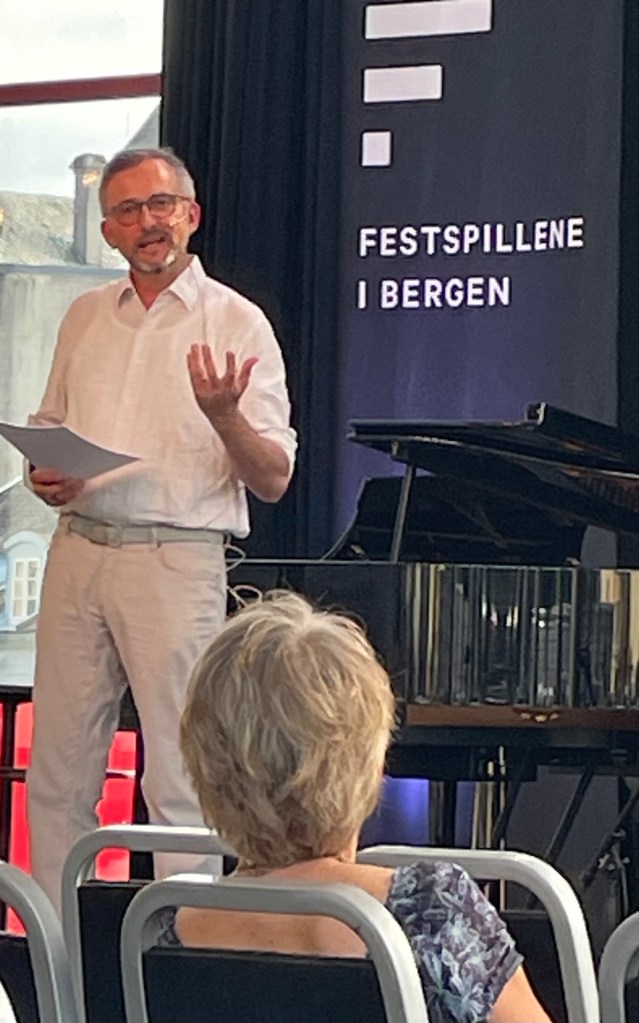
Wolfgang also announced a follow up IMAGINE workshop later in the week, for anyone who felt touched by the issues raised. The workshop is convened by Wolfgang along with Maren Metell. Its aim is to advance the ways we communicate with each other about end of life, and to develop a reservoir of images and vocabularies for that process. This will be the third such event. Previous IMAGINE workshops included palliative care workers and researchers, healthcare ‘users’, architects, ageing activists and academic researchers. This time the workshop is for members of the public, an opportunity to collect and share notions of what a ‘good’ process of dying and death might mean and look like. Its aims are to develop cultural practices for further integrating dying with everyday living, to think about how, whether and when music might help that process, and to promote knowledge exchange around those themes….
 Island Life and Death
Leave a comment